

Quick Answers





Can CNC milling achieve precision down to 0.1 mm?
- September 9, 2025
- Jason Chang
- 3:00 am
In the world of manufacturing, precision is key. Whether you are creating intricate components for aerospace applications or simple parts for consumer goods, the ability to achieve tight tolerances can make or break a project.
One technology that has revolutionized precision machining is CNC milling.
But can CNC milling achieve precision down to 0.1 mm? Let’s explore this question in depth.
What is CNC Milling?
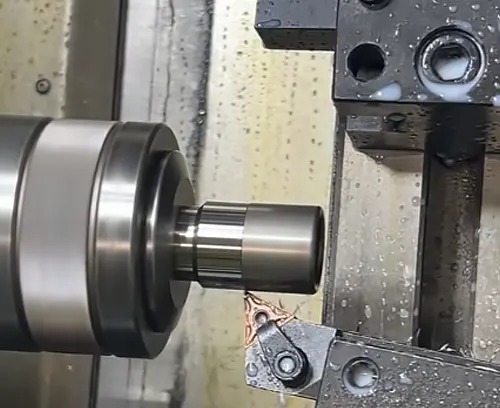
CNC milling is a subtractive manufacturing process that uses computer numerical control (CNC) machines to remove material from a workpiece.
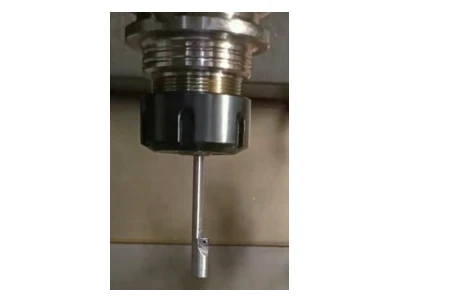
These machines are equipped with rotating cutting tools that can move along multiple axes to create complex shapes and features with high precision.
The programming of these machines is done using computer-aided design (CAD) software, which allows for the creation of highly detailed and accurate toolpaths.
The Role of Tolerances in CNC Milling
Tolerances play a crucial role in the world of manufacturing. They define the allowable deviation from a specified dimension, ensuring that parts fit together correctly and function as intended.
In CNC milling, achieving tight tolerances requires careful consideration of factors such as tool selection, cutting parameters, and machine capability.
When it comes to precision machining, every detail matters. Even small variations in tool geometry or cutting speed can have a significant impact on the final part dimensions.
That’s why it is essential to have a thorough understanding of the capabilities and limitations of CNC milling machines.
Precision of CNC Milling Machines
CNC milling machines are known for their ability to achieve high levels of precision. With the right tools and parameters, these machines can produce parts with tolerances as tight as 0.1 mm.
However, achieving this level of precision requires careful planning and attention to detail.
Factors such as machine rigidity, tool runout, and thermal stability can all influence the final accuracy of a CNC milled part.
By optimizing these factors and using advanced machining techniques, it is possible to achieve extremely tight tolerances in the range of 0.1 mm or even smaller.
Optimizing CNC Milling for Precision
To achieve precision down to 0.1 mm in CNC milling, several strategies can be employed. One key factor is the selection of cutting tools.
High-precision tools with sharp cutting edges and minimal runout are essential for achieving tight tolerances.
Another important consideration is the choice of cutting parameters. By adjusting factors such as cutting speed, feed rate, and depth of cut, machinists can optimize the machining process for maximum accuracy.
Additionally, using advanced toolpath strategies such as high-speed machining and trochoidal milling can further enhance precision.
Conclusion
In conclusion, CNC milling can indeed achieve precision down to 0.1 mm and beyond. By leveraging the capabilities of modern CNC machines and employing advanced machining techniques, manufacturers can produce parts with extremely tight tolerances.
With careful planning, attention to detail, and a thorough understanding of the machining process, achieving high precision in CNC milling is not only possible but essential for success in today’s competitive manufacturing environment.